What Is an Audiometry Test? A Simple Guide
Everything you need to know about audiometric testing: Pure Tone Audiometry, bone conduction, sound booths, and reading your audiogram results.
- Audiometry provides an accurate, objective graph of your auditory thresholds.
- It differentiates between sensorineural (inner ear) and conductive (middle ear) hearing issues.
- Testing is painless, safe, and takes approximately 30 minutes.
Audiometry is the clinical measurement of your hearing acuity. It evaluates your ability to hear sounds of varying pitch (frequency) and loudness (intensity).
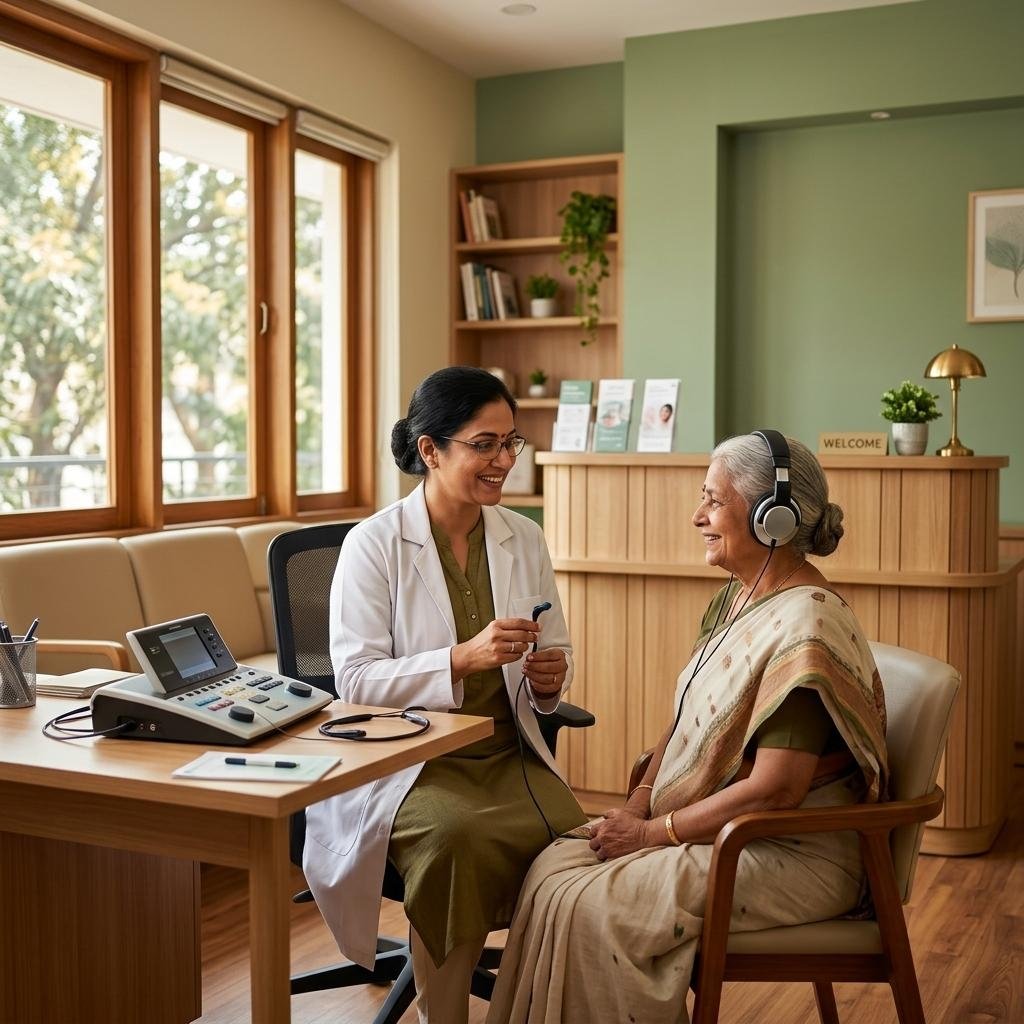
How it works: Inside a sound-treated booth, an audiologist tests frequencies between 250 Hz (deep bass) and 8,000 Hz (high treble). The softest sound you can detect at each frequency is marked as your hearing threshold in decibels hearing level (dB HL).
Air vs Bone Conduction: Air conduction evaluates the outer, middle, and inner ear through earphones. Bone conduction uses a gentle oscillator placed on the bone behind your ear to stimulate the inner ear cochlea directly, isolating the exact location of any hearing deficit.
Reading the Audiogram: Normal hearing is classified between 0 and 20 dB HL. Thresholds between 25 and 40 dB indicate mild loss, 40 to 70 dB moderate loss, 70 to 90 dB severe loss, and 90+ dB profound loss.