Audiology Care & Hearing Loss
Solutions in Bangalore
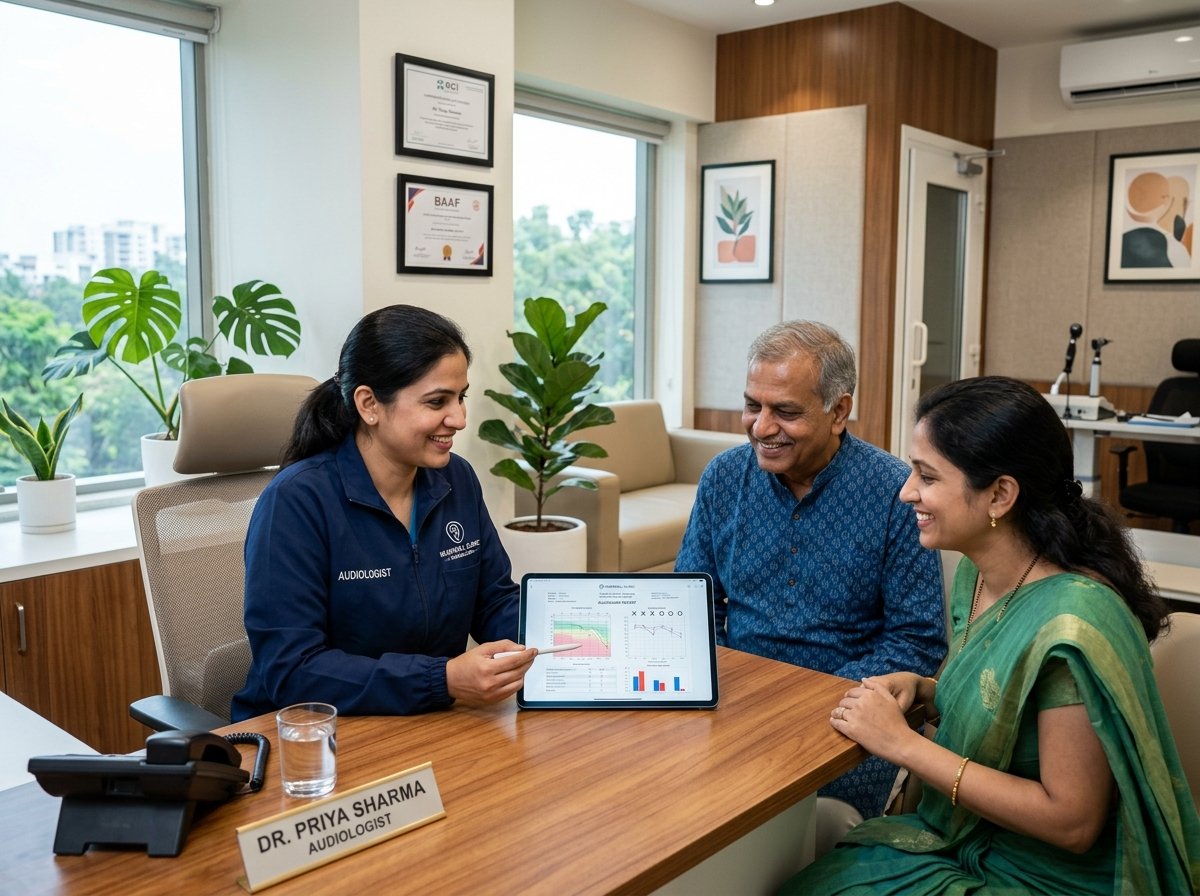
Hearing connects us to family, conversations, and the moments that matter. At Bluebells, our certified audiologists in Bangalore guide you through accurate diagnostics, understanding your hearing loss type, and finding personalized solutions.

Common Signs of Hearing Loss
Hearing changes often develop gradually. Review these common behavioral indicators.
Increasing Television / Phone Volume
Setting the TV or smartphone volume significantly louder than family members or friends prefer.
Frequently Asking Others to Repeat
Regularly needing people to repeat sentences, speak slower, or raise their voices during conversations.
Struggling in Noisy Environments
Difficulty following conversations in restaurants, family gatherings, traffic, or crowded rooms.
Speech Sounds Muffled / Missing Consonants
Feeling that people are mumbling; difficulty distinguishing high-pitch sounds like 's', 'f', 'th', and 'sh'.
Exhaustion After Social Conversations
Feeling unusually drained or stressed after participating in conversations due to continuous cognitive listening strain.
Ringing or Buzzing in the Ears
Perceiving phantom sounds (ringing, humming, clicking) when in quiet environments.
Recognize these signs in yourself or a family member?
A 30-minute diagnostic hearing test provides clear, accurate answers.
The Four Primary Types of Hearing Loss
Understanding where and why hearing loss occurs in the auditory system.
Sensorineural Hearing Loss (SNHL)
Sensorineural hearing loss occurs when the microscopic sensory hair cells within the cochlea or the neural pathways connecting the inner ear to the brain become damaged or degenerate. It affects not only sound volume (loudness) but crucially sound clarity (speech understanding), particularly in background noise.
- Natural aging process (Presbycusis)
- Prolonged or sudden exposure to excessive noise levels
- Ototoxic medications that affect inner ear sensory cells
- Genetic predisposition and hereditary factors
Conductive Hearing Loss
Conductive hearing loss results from a physical obstruction or mechanical disruption that impedes acoustic energy from reaching the inner ear. Sounds often simply seem diminished in overall volume rather than severely distorted in clarity.
- Impacted earwax (cerumen impaction) in the ear canal
- Fluid accumulation in the middle ear (Otitis Media with effusion / 'glue ear')
- Perforation or scarring of the eardrum (tympanic membrane)
- Ear infections (Otitis Externa or Otitis Media)
Mixed Hearing Loss
Mixed hearing loss occurs when damage to the sensory cochlea or auditory nerve coexists with a mechanical barrier in the outer or middle ear (for instance, an individual with age-related presbycusis who also develops a middle ear infection or perforated eardrum).
- Chronic otitis media occurring in an ear with pre-existing age-related hearing loss
- Head trauma causing both eardrum rupture and inner ear concussion
- Advanced otosclerosis affecting both the middle ear ossicles and the cochlear capsule
Sudden Sensorineural Hearing Loss (SSNHL)
Sudden Sensorineural Hearing Loss (often called sudden deafness) is an acute medical event where hearing decreases by at least 30 decibels across three contiguous frequencies within a 3-day window. It frequently presents upon waking in the morning with a 'popped' or blocked ear sensation.
- Viral infections affecting the cochlear nerve (e.g., herpes viruses)
- Vascular compromise / micro-circulatory disruption in the inner ear
- Autoimmune inner ear disease
- Cochlear membrane rupture or acoustic trauma
Practical Tips for Hearing Protection
Proactive steps and evidence-based clinical recommendations you can follow every day to safeguard your hearing and prevent acoustic fatigue.
Protect Ears from Excessive Noise
Wear certified hearing protection (earplugs or earmuffs) when operating power tools, attending loud concerts, or working in noisy industrial zones (>85 dBA).
Follow the 60/60 Rule for Earphones
When using headphones or earbuds, listen at no more than 60% of the maximum volume for no longer than 60 minutes at a stretch.
Never Insert Cotton Swabs in Ear Canals
Cotton buds can push earwax deeper against the eardrum or cause canal trauma. Clean only the outer ear gently with a cloth.
Schedule Routine Baseline Hearing Screenings
Adults over age 50 should receive an annual diagnostic audiogram to catch subtle acoustic changes early.
Manage Cardiovascular & Metabolic Health
Healthy blood circulation supports the oxygen-sensitive hair cells of the inner ear. Monitor blood pressure and blood sugar levels.
Need Custom Hearing Protection or Musician/Swimmer Earplugs?
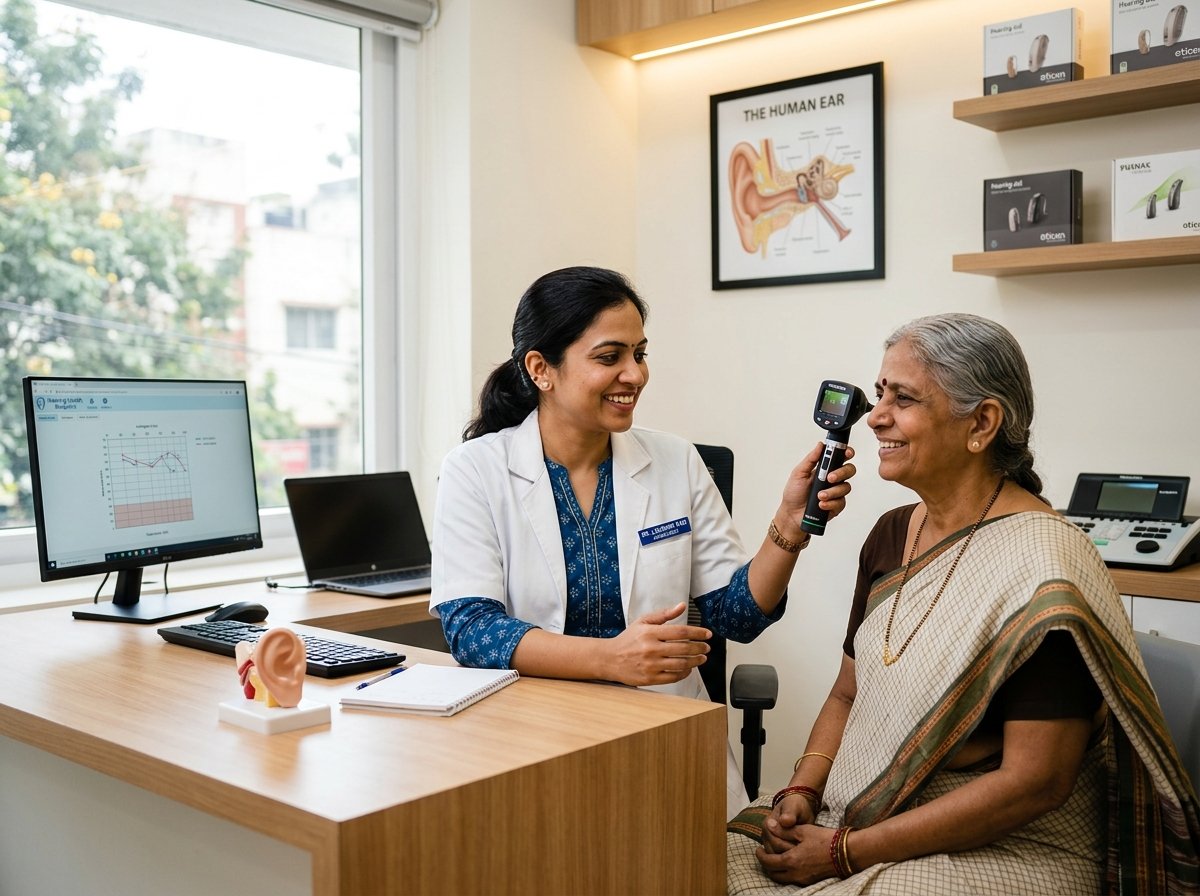
Our audiologists in Bangalore craft custom-moulded noise attenuation plugs tailored to your ear canals.
Our 5 Core Audiology Services
A structured, supportive clinical journey from initial testing to lifelong aftercare.
Diagnostic Hearing Testing (PTA)
Clinical Pure Tone Audiometry & diagnostic evaluation in calibrated sound-treated booths.
Comprehensive Hearing Assessment
In-depth auditory diagnostic evaluation, speech understanding analysis, and lifestyle profiling.
Digital Hearing Aids & Technology Selection
Modern digital hearing aids from Signia, Phonak, and Starkey with a 2-week trial period.
Precision Hearing Aid Fitting (REM)
Real-Ear Measurement (REM) acoustic calibration for natural sound and all-day comfort.
Senior Citizen Doorstep Home Visit Hearing Care
Complete clinical audiology evaluations, device trials, and fitting in the comfort of your home.
Frequently Asked Questions
Your Better Hearing
Starts Here.
Take the first step toward clearer speech and effortless conversation. Book a consultation with our certified audiology team at our RT Nagar main clinic, any of our Bengaluru centres, or in the comfort of your home.